Product Overview
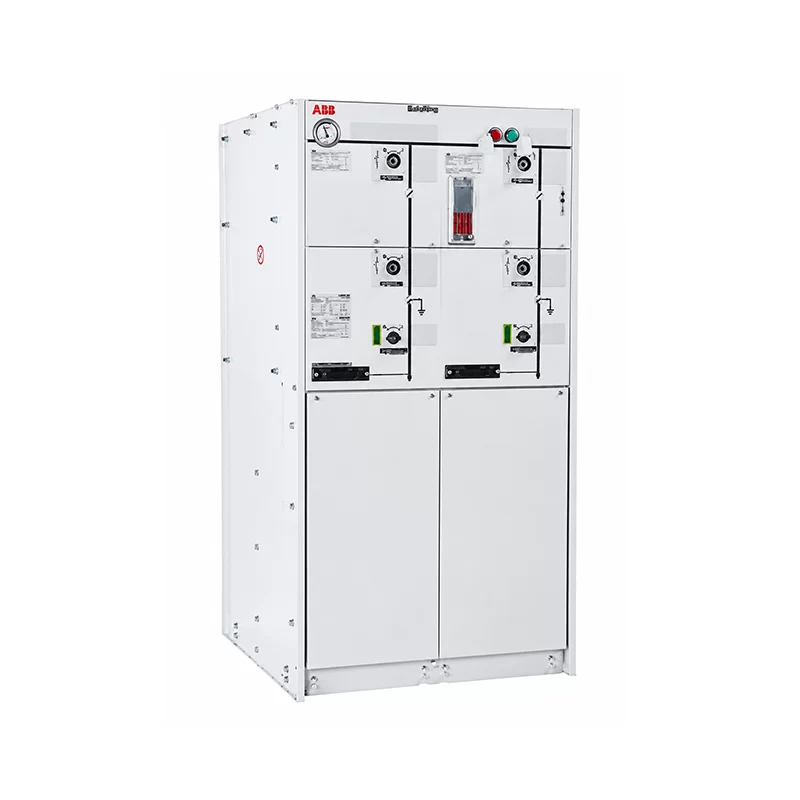
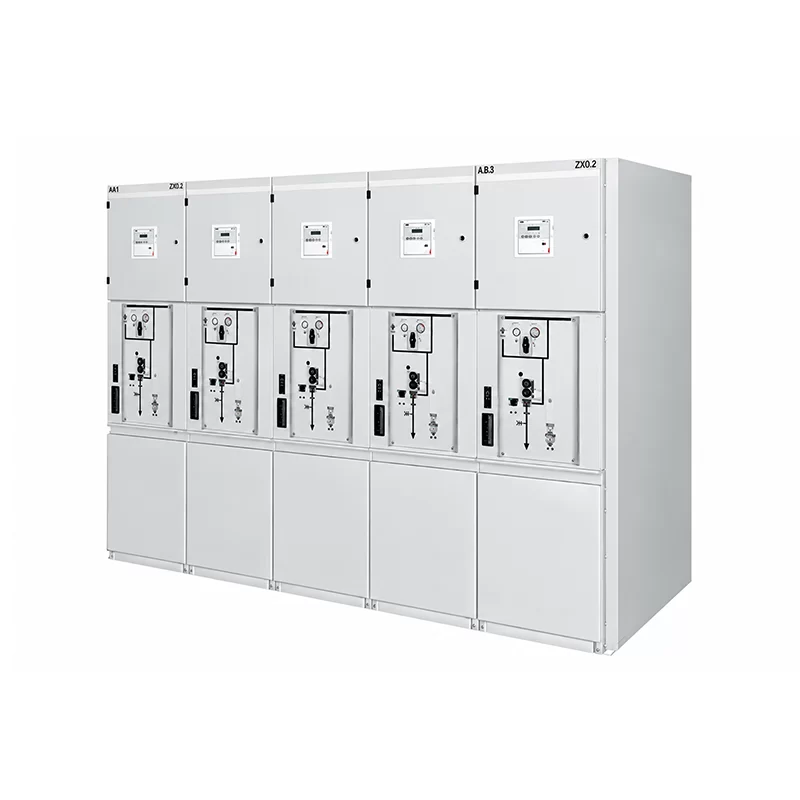
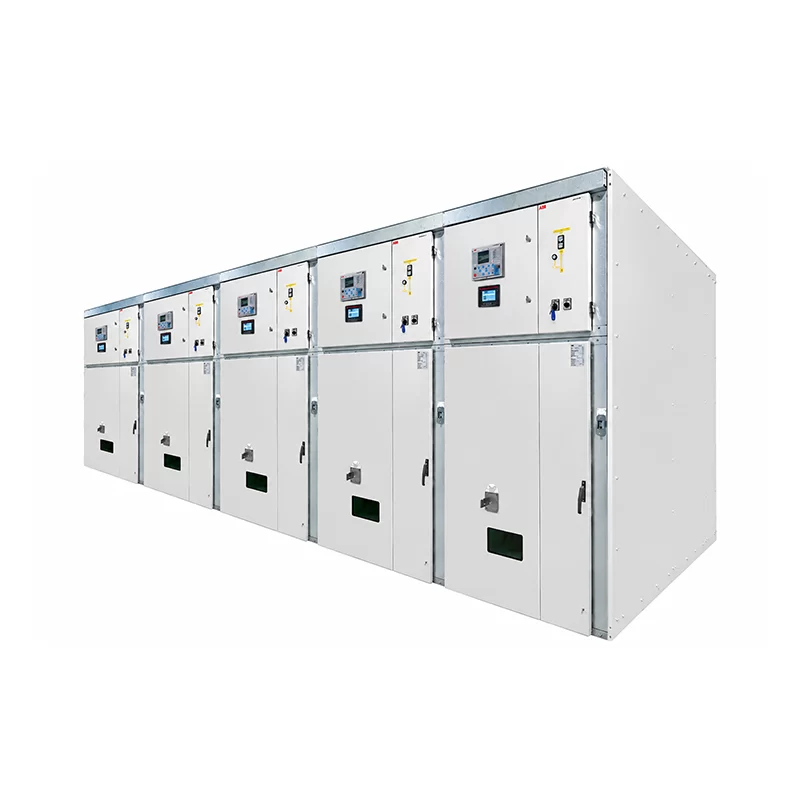
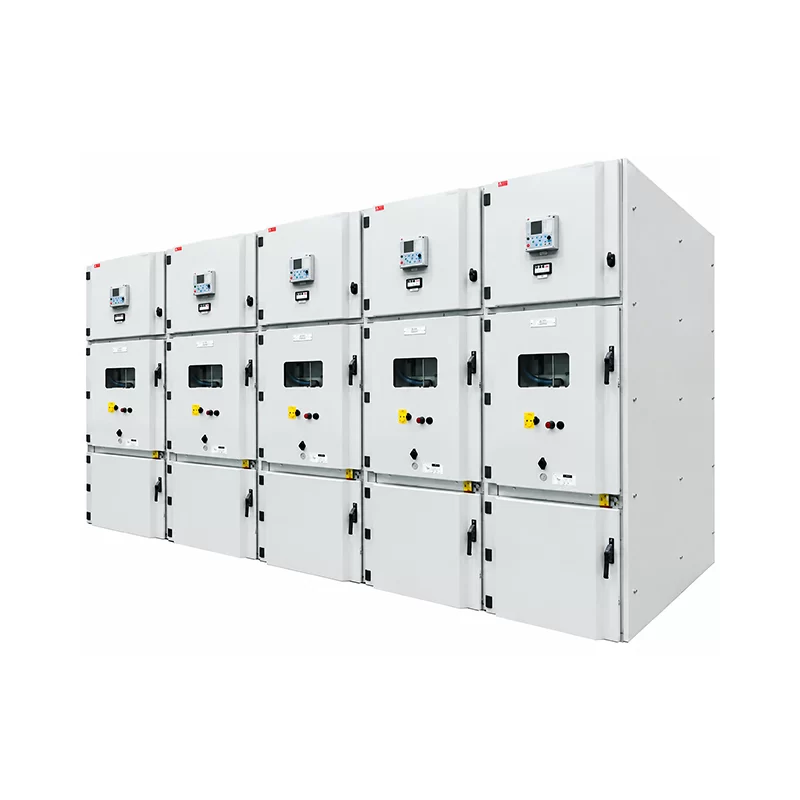
ABB UniGear ZS1 is a three-phase, metal-enclosed, air-insulated medium-voltage switchgear system designed for indoor power distribution applications up to 12 kV.
The switchgear is factory-assembled and type-tested in accordance with IEC 62271-200 and IEC 62271-1. It uses a single-busbar system and withdrawable functional units, typically equipped with ABB VD4 vacuum circuit breakers.
With a compact 500 mm feeder panel width, UniGear ZS1 combines high electrical performance with efficient use of installation space. It supports main busbar currents up to 4000 A, branch currents from 630 A to 1250 A, and short-time withstand currents up to 31.5 kA for 3 seconds.
The switchgear is divided into separate high-voltage compartments for the busbar, circuit breaker, and cable connections, plus a low-voltage control cabinet. Comprehensive mechanical and electrical interlocks, automatic shutters, pressure-relief flaps, and internal arc classification provide a high level of operational and personnel safety.
Typical applications include:
· Utility power distribution
· Industrial power systems
· Manufacturing facilities
· Commercial buildings
· Infrastructure projects
· Transportation systems
· Power plants and substations
· Indoor secondary and primary distribution systems
Product Features
Compact 500 mm Panel Design
UniGear ZS1 provides high electrical ratings within a compact feeder panel.
Key design characteristics include:
· Feeder panel width of 500 mm
· Basic height of 2100 mm
· Height with control cabinet of 2200 mm or 2595 mm
· Panel depth of 1310 mm or 1620 mm
· Single-busbar configuration
· Factory-assembled and type-tested construction
· Modular arrangement for different feeder applications
Metal-Enclosed Compartmentalized Construction
The enclosure is manufactured from 2 mm thick galvanized steel and divided into four principal compartments:
1. Busbar compartment
2. Circuit-breaker compartment
3. Cable connection compartment
4. Low-voltage control cabinet
This compartmentalized construction improves:
· Personnel safety
· Fault containment
· Operational reliability
· Maintenance accessibility
· Separation of primary and secondary circuits
Withdrawable Circuit-Breaker Technology
The switchgear normally uses a withdrawable ABB VD4 vacuum circuit breaker.
Withdrawable system features include:
· Service position
· Test/disconnected position
· Manual racking operation
· Automatic shutters over fixed contacts
· Control wiring plug
· Mechanical position indication
· Interchangeability between units of the same design
· Mechanical coding to prevent insertion of an incorrect unit
Additional withdrawable units can include:
· Voltage-transformer trucks
· Earthing trucks
· Cable-testing trucks
· Isolation trucks
Internal Arc Protection
UniGear ZS1 is classified for internal arc protection according to IEC 62271-200.
Protection features include:
· Internal Arc Classification: IAC AFLR
· Arc-fault withstand current up to 31.5 kA for 1 second
· Accessibility from the front, lateral sides, and rear
· Pressure-relief flaps on high-voltage compartments
· Controlled release of pressure and hot gases
· Optional pressure-relief ducts
· Optional Ith limiters for ultra-fast breaker tripping
When an optional Ith limiter detects pressure-flap movement, it can initiate circuit-breaker opening in less than 15 ms.
Comprehensive Safety Interlocks
Mechanical and electromechanical interlocks prevent incorrect or unsafe operating sequences.
Principal interlocks include:
· The withdrawable unit can only move when the circuit breaker is open.
· The unit cannot be moved when the earthing switch is closed.
· The earthing switch can only close when the withdrawable unit is in the test/disconnected position.
· The apparatus-compartment door cannot be opened when the breaker is in the service position.
· The cable-compartment door cannot be opened unless the earthing switch is closed.
· Mechanical coding prevents installation of incompatible withdrawable units.
· Automatic shutters isolate fixed contacts when the breaker is withdrawn.
High Electrical Performance
The switchgear supports demanding medium-voltage distribution requirements.
Performance highlights include:
· Rated voltage: 12 kV
· Main busbar current up to 4000 A
· Branch connection current from 630 A to 1250 A
· Short-time withstand current up to 31.5 kA for 3 seconds
· Peak withstand current up to 80 kA
· Internal arc withstand up to 31.5 kA for 1 second
· 50 Hz or 60 Hz operation
Flexible Busbar System
Different busbar profiles are used according to the rated current:
· Flat copper busbars up to 1250 A
· Single D-shaped copper busbars from 1600 A to 2000 A
· Double D-shaped copper busbars from 2500 A to 4000 A
The busbar compartment accommodates:
· Main copper busbars
· Branch conductors
· Three-phase cast-resin bushings
· Insulated busbar joints
· Silver-plated electrical connection surfaces
Multiple Installation Options
UniGear ZS1 supports several foundation arrangements:
· Embedded C-profile base irons
· Direct installation on level concrete
· Raised false-floor installation
· Welded installation on a steel floor frame
The false-floor method is not recommended for seismic applications.
Condition-Based Maintenance Support
In addition to traditional preventive maintenance, ABB supports risk-based and condition-based maintenance strategies.
Potential benefits include:
· Online condition monitoring
· Equipment health assessment
· Maintenance based on actual operating condition
· Reduced unnecessary servicing
· Extended equipment lifecycle
· Improved operational availability
Main Functions
Medium-Voltage Power Distribution
UniGear ZS1 receives, controls, protects, and distributes electrical power in indoor medium-voltage networks.
Its primary functions include:
· Incoming power control
· Outgoing feeder distribution
· Busbar power distribution
· Transformer feeder protection
· Motor feeder protection
· Cable feeder protection
· Electrical isolation
· Fault interruption
Circuit Switching and Fault Interruption
The withdrawable VD4 vacuum circuit breaker performs normal switching and fault interruption.
Supported operations include:
· Load current switching
· Short-circuit current interruption
· Local electrical opening and closing
· Remote electrical opening and closing
· Manual mechanical operation
· Motor-operated spring charging
· Manual spring charging
Mechanical indicators display:
· Circuit breaker open or closed
· Closing spring charged or discharged
Service and Test Position Operation
The withdrawable circuit breaker can be moved between the service and test/disconnected positions.
Service position
In the service position:
· Main contacts are connected to the primary system.
· Control circuits are connected.
· The breaker can perform normal switching and protection duties.
Test/disconnected position
In the test/disconnected position:
· Main contacts are isolated from the primary system.
· Control circuits can remain connected for testing.
· The circuit breaker can be tested without energizing the main circuit.
· The earthing switch can be operated when interlock conditions are satisfied.
Earthing Function
The ET1 earthing switch provides safe earthing of the cable-side circuit.
Its functions include:
· Earthing the cable circuit before maintenance
· Providing visible position indication
· Interlocking cable-compartment access
· Preventing operation when the breaker is in the service position
· Snap-action operation independent of operator speed
The earthing switch is operated by turning its lever through 180 degrees.
Automatic Shutter Operation
Automatic shutters cover the fixed primary contacts when the withdrawable circuit breaker is moved out of the service position.
The shutters:
· Prevent accidental contact with energized fixed contacts
· Open automatically during breaker insertion
· Close automatically during withdrawal
· Improve safety during inspection and maintenance
Internal Arc Pressure Relief
Each high-voltage compartment includes a pressure-relief flap.
During an internal arc fault:
1. Internal pressure rises.
2. Calibrated plastic fasteners release the pressure-relief flap.
3. The flap opens to relieve pressure.
4. Hot gases are directed upward or into an optional pressure-relief duct.
5. Optional Ith limiters initiate ultra-fast circuit-breaker tripping.
Metering and Protection
The cable and control compartments can accommodate equipment for measurement, protection, and control.
Supported equipment includes:
· Current transformers
· Voltage transformers
· Protection relays
· Surge arresters
· Conventional secondary equipment
· Microprocessor-based protection and control devices
· Metering trucks
· Voltage-transformer trucks
Cable Connection
The cable compartment provides connections for medium-voltage power cables.
Standard capabilities include:
· Bottom cable entry
· Rubber cable reducer rings
· Up to two parallel cables per phase in standard 1250 A panels
· Maximum cable conductor cross-section of 300 mm²
· Cable-screen connection to the earthing strip
· Installation of current transformers and surge arresters
Operational Interlocking
The interlocking system coordinates the circuit breaker, withdrawable truck, earthing switch, and compartment doors.
It prevents:
· Moving a closed circuit breaker
· Closing the earthing switch with the breaker in service position
· Inserting the breaker while the earthing switch is closed
· Opening the circuit-breaker compartment in service position
· Opening the cable compartment before earthing
· Inserting an incorrectly rated withdrawable unit
Commissioning and Testing
Before energization, the following functions and conditions must be verified:
· Earthing-bar connections
· Main-circuit insulation
· AC withstand performance
· Mechanical interlocks
· Electrical interlocks
· Circuit-breaker operation
· Withdrawable unit movement
· Earthing-switch operation
· Correct feeder cable phase sequence
· Removal of tools and foreign objects
Specifications
General Electrical Data
|
Parameter |
IEC Rating |
GB Rating |
| Rated voltage | 12 kV | 12 kV |
| Rated insulation voltage | 12 kV | 12 kV |
| Power-frequency withstand voltage | 28 kV for 1 minute | 42 kV for 1 minute |
| Lightning impulse withstand voltage | 75 kV | 75 kV |
| Rated frequency | 50/60 Hz | 50/60 Hz |
| Rated short-time withstand current | Up to 31.5 kA for 3 s | Up to 31.5 kA for 3 s |
| Rated peak withstand current | 80 kA | 80 kA |
| Internal arc withstand current | Up to 31.5 kA for 1 s | Up to 31.5 kA for 1 s |
| Main busbar rated current | Up to 4000 A | Up to 4000 A |
| Branch connection rated current | 630~1250 A | 630~1250 A |
Internal Arc Classification
|
Item |
Specification |
| Classification | IAC AFLR |
| Accessibility type | A |
| Arc-fault current | Up to 31.5 kA |
| Arc-fault duration | 1 s |
| Accessible sides | Front, lateral, and rear |
| Pressure relief | Top-mounted compartment flaps |
| Optional fast protection | Ith limiter |
| Ith limiter trip initiation | Less than 15 ms after pressure-flap activation |
Panel Construction
|
Item |
Specification |
| Switchgear type | Indoor metal-enclosed air-insulated switchgear |
| Phase system | Three-phase |
| Busbar arrangement | Single busbar |
| Enclosure material | High-quality galvanized steel |
| Steel thickness | 2 mm |
| Circuit-breaker configuration | Withdrawable |
| Typical circuit breaker | ABB VD4 vacuum circuit breaker |
| High-voltage compartments | Busbar, circuit breaker, cable connection |
| Secondary compartment | Low-voltage control cabinet |